
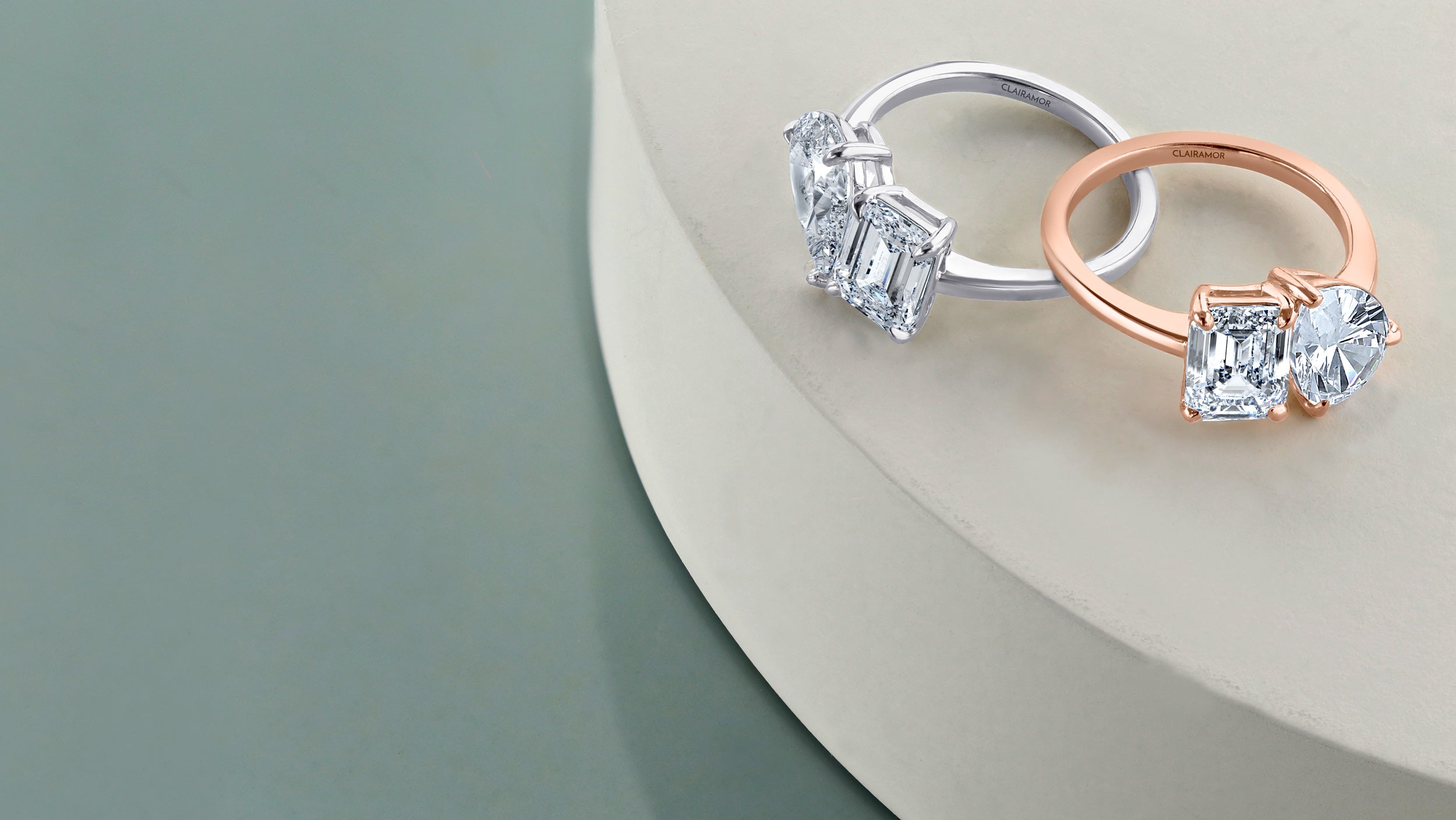
In a 2018 ruling by the Federal Trade Commission, the definition of a diamond was changed. The qualifying factor that they must be, "natural" was removed. This was based on scientific facts, stating that a diamond is a gemstone, no matter the origin.
Visually, there is no difference between a lab-grown diamond and a mined diamond. Even career jewelers and schooled gemologists cannot tell them apart. Conventional machinery and microscopes are not able to spot the distinction between the two. Only specifically-designed, advanced technology can differentiate between the two.
There are two main processes in which lab-grown diamonds are made: high-pressure high temperature (HPHT) and chemical vapor deposition (CVD).
The HPHT process is an outdated process for creating lab-grown diamonds. It's considered more costly and requires the use of much more energy than the alternative of CVD.
To create a lab-grown diamond using the HPHT process, a diamond seed is placed into pure carbon. The chamber is then heated to about 1500 degrees Celsius and over 1,000,000 psi. In this environment, carbon begins to attach to the diamond.
Compared with HPHT, CVD is regarded as the more sustainable process. This practice begins with the same diamond seed as HPHT but then the chamber is filled with carbon-rich gases, and placed into a vacuum at about 800 degrees Celsius. This allows the gases to turn into a plasma state, building the diamond seed into a uniform square shape. This process requires approximately one month for the lab-created diamond to grow, before it’s sent into the cutting and polishing phases.
Certified lab-grown diamonds are a more ethical and eco-friendly approach to sourcing diamonds than traditional diamond mining methods. Diamond mining disturbs 250 tons of earth, uses 12 gallons of water, and releases 143 pounds of carbon dioxide into the atmosphere for every carat mined.
Also, diamonds are nearly impossible to trace, leading to unethically mined diamonds reaching the marketplace. Despite the high value of precious metals and gemstones, many of the mine workers very often live in poverty without basic necessities like running water and electricity. Problems like these are the reason the diamond industry gets its dishonorable reputation.
Certified lab-grown diamonds undergo the same evaluation process as mined diamonds. Both lab-grown diamonds and mined diamonds are available in varying colors, clarity, cut, and carat. As such, lab-grown diamond certification mirrors that of mined diamonds.
Lab-created diamonds are produced in a controlled environment in a matter of weeks making them much less costly to source than mined diamonds. Additionally, production of lab-grown diamonds can be scaled to meet demand, whereas the supply of mined diamonds is finite which drives up their cost. Finally, certified lab-grown diamonds are not rare, so they don’t command the same inflated prices as mined diamonds.
It is nearly impossible to distinguish between certified lab-grown diamonds and mined diamonds with the naked eye. Recognizing the differences between them requires a specially trained gemologist using technical tools designed for that exact purpose. The factors that allow these gemologists to discern the difference come from the way that the diamonds are created. However, the origin of lab-grown diamonds does not diminish the quality of the stone whatsoever. Certified lab-grown diamonds possess the same characteristics of clarity, color, fluorescence, and sparkle as their mined counterparts.
Lab-grown diamonds are REAL diamonds, they are not fake or cheap. They are not a knock-off or a look-alike. Certified lab-grown diamonds can only be evaluated by jewelry professionals using special equipment for proper identification.Lab-grown diamonds come in every shape and carat weight, making them an ideal luxury purchase at a fraction of the price of mined diamonds. Lab-grown diamonds are available in white as well as a variety of colors including yellow, blue, and pink. These colored diamonds often have a rich saturation, perfect for those who love vibrancy and show-stopping sophistication.
Do you dream of a particular diamond engagement ring, anniversary ring, wedding band, or other fine jewelry design but worry about the cost? Certified lab-grown diamonds are the most affordable option for making your dreams come true.
Covered for life with our commitment to craftsmanship and quality.

Luxury within reach, backed by transparent pricing you can trust.
Sustainably lab-crafted for a brighter future and unparalleled brilliance.