
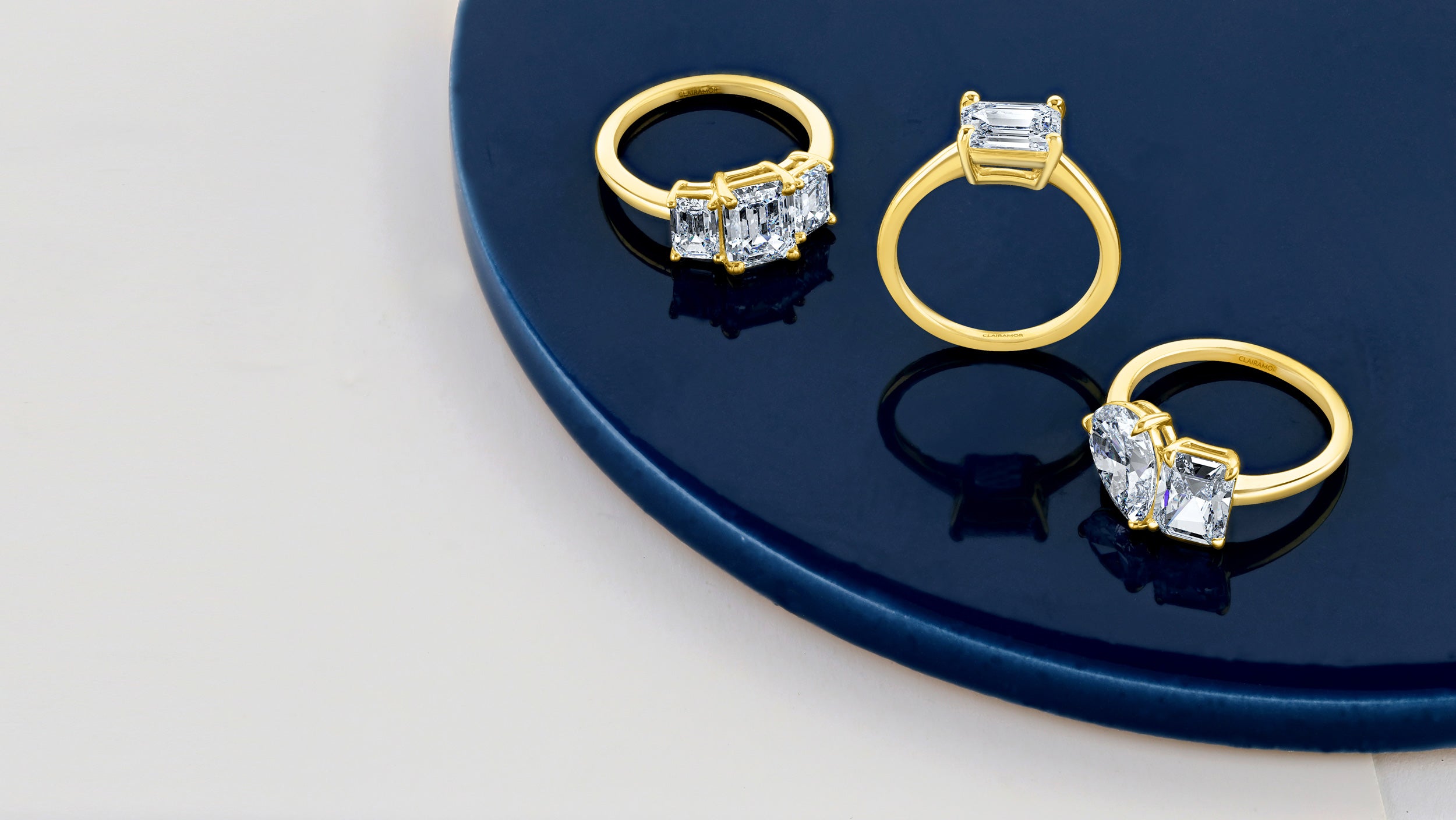
For decades, scientists sought to replicate the Earth’s natural diamond formation process to create stones with the same physical brilliance. After several years, a GE chemist created the first synthetic diamond using a method known as High Pressure High Temperature (HPHT). Over the next two decades, the method evolved until scientists were able to produce gem-quality diamonds.
By the 1980s, scientists had developed a new methodology for growing diamonds in a lab called Chemical Vapor Deposition or CVD. The CVD process gave them greater control over purity, size, and consistency than the HPHT method.
By 2000, commercial producers began scaling production of gem-quality, lab-grown diamonds for use in jewelry. Since that time, consumer demand for lab-grown diamonds has skyrocketed. People began to recognize the advantages of buying gems that were more affordable, sustainable, and ethically sourced than the mined alternatives.
The CVD Method for Creating Lab-Grown Diamonds
Step-by-step, technicians follow the process outlined to grow real diamonds in a lab.
| Steps | What Happens | Why It Matters |
|---|---|---|
| 1. Seed placement | Thin diamond “seeds” (small pieces of either mined or lab-grown diamonds) are placed in a vacuum chamber. | Diamond seeds initiate the growth of lab-grown diamonds, acting like templates to provide the atomic structure that new carbon atoms need to align with during the growth process. |
| 2. Gas introduced | Technicians fill the vacuum chamber with carbon-rich gas, typically hydrogen and methane. | Hydrogen stabilizes the environment while methane provides the carbon source. |
| 3. Microwave or plasma activation | The building blocks of the diamond, carbon atoms, begin to attach themselves to the diamond seed, creating layers. | It’s at this point in the process that the diamond grows visibly in size. This step can take weeks for the layers to accumulate into a gemstone that can be cut and polished. |
| 4. Growth | The diamond grows as carbon continues depositing on the layers. | As the diamond grows, technicians continue to have control over its purity, quality, and size. |
| 5. Post growth | At this point, technicians may choose to treat a diamond with heat to improve its color and clarity. | The post-growth step enhances the visual appeal and value of the gemstone. |
| 6. Cutting and polishing | In the final step, technicians cut, facet, and polish the gemstone, making it ready for placement in fine jewelry. | This step ensures maximized brilliance as well as market readiness. |
Choose a Brilliant Lab-Grown Diamond Engagement Ring
The process of growing a diamond in a lab is neither complex nor time-consuming. The results, however, are simply stunning. Are you ready to begin designing your own bespoke lab-grown diamond engagement ring? Begin the process now to create a brilliant ring that reflects the beauty of your love.
