
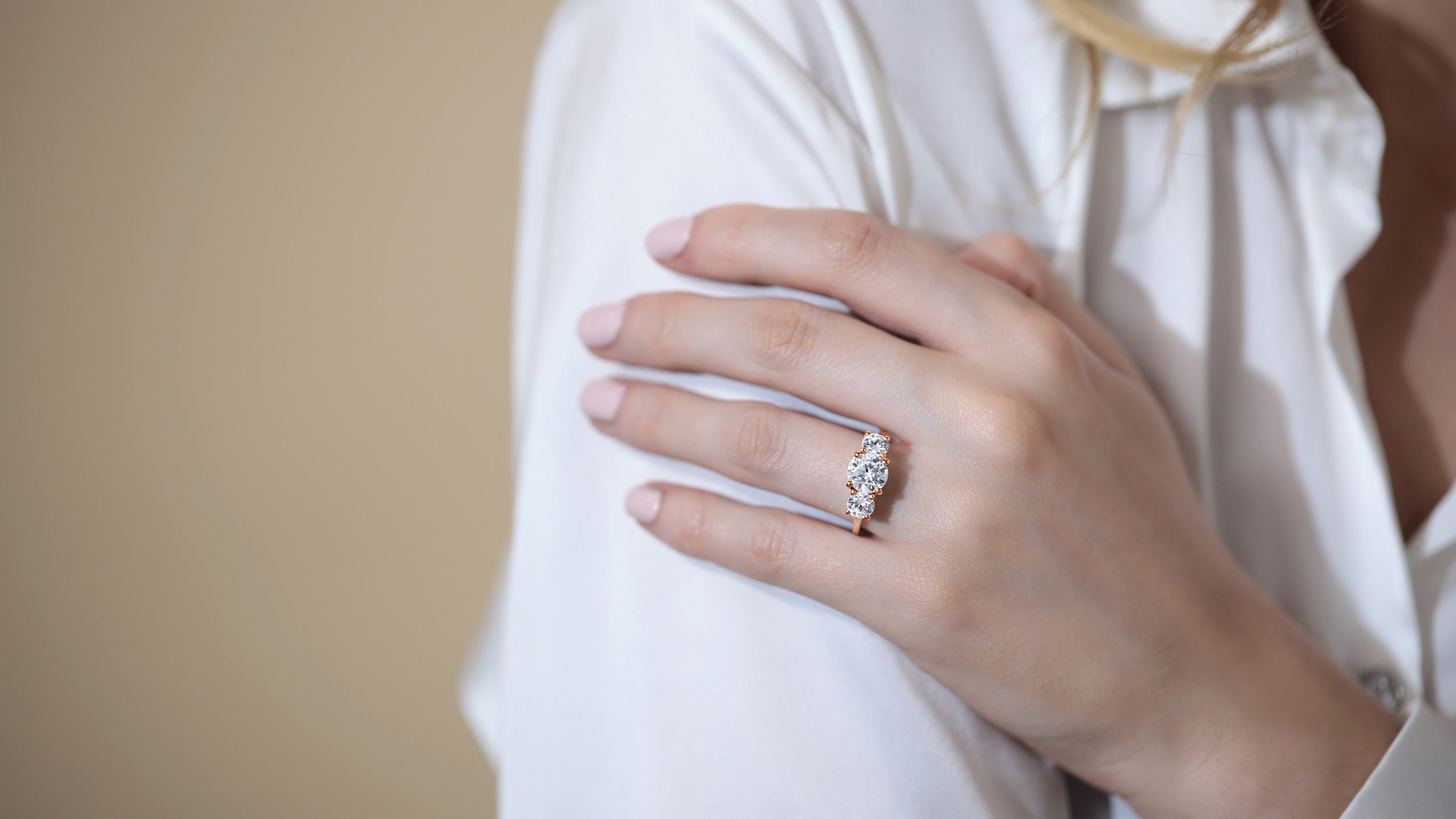
When it comes to lab-grown diamonds, “value” describes more than just the monetary worth of the gem. In fact, there are many value factors to consider when choosing a lab-grown diamond engagement ring. There’s value in the stone’s longevity because the ring must last a lifetime. There’s value in quality, beauty, style, sustainability, design precision, and cost. Finally, there’s value in the statement that the lab-grown diamond engagement ring makes about your love and commitment to one another.
The Value of Lab-Grown Diamonds vs. Mined Diamonds
When you compare them side by side, lab-grown diamonds meet or exceed the value of mined diamonds. Take some time to consider each and how they align with what’s most important to you.
| Value | Lab-Grown Diamonds | Mined Diamonds |
|---|---|---|
| Purchasing power | Lab-grown diamonds are more affordable than mined diamonds. They typically cost as much as 70% less than their counterparts, allowing you to get a larger stone for the same amount you’d pay for a smaller, mined diamond. | Mined diamonds can cost significantly more than lab-grown diamonds. This is not due to their superior quality, but rather to the expense of mining, supply chain costs, and market-driven factors. |
| Structure and purity | Because they’re grown in a controlled environment, lab diamonds often achieve higher Type IIa purity, meaning they’re almost entirely carbon. Growers can eliminate even trace impurities, resulting in brilliance and quality that often exceeds mined diamonds. | Type IIa purity is found in only 2% of mined diamonds, making them incredibly rare. As such, the majority of mined diamonds lack the brilliance of lab-grown gemstones. |
| Ethical and environmental concerns | Lab-produced diamonds are grown in a controlled environment and are controversy free, as their production does not require massive earth excavation, excessive water usage, child labor concerns, or human rights abuses. | Traditional diamond mining has significant environmental and ethical consequences. Extracting one carat displaces hundreds of tons of earth and uses large amounts of water. These diamonds are also associated with "blood diamond" conflicts tied to war-zone mining. |
| Insurance costs | The lower cost of lab diamonds results in lower insurance premiums, since their replacement value is also lower. | Insurers often offer “like-for-like” replacement policies rather than cash payouts. This means a replacement stone may differ in character from the original mined diamond. |
| Rare color accessibility | Lab technology makes rare colored diamonds (pink, blue, yellow) significantly more accessible and affordable. | Colored mined diamonds are extremely rare, making them astronomically expensive to purchase. |
| Quality and certification | Lab-grown diamonds are real diamonds. Because they are visually and structurally identical to mined diamonds, gemological laboratories apply the same certification standards to both. Lab-grown diamonds can also be traced back to their origin with greater accuracy. | Grading fees for mined diamonds are typically higher. Additionally, it is not always possible for laboratories like GIA to determine the exact geographic origin of a mined diamond. |
Choose a Diamond You’ll Value Forever
Now that you understand the superior value of lab-grown diamonds, are you ready to start designing your own engagement ring? Start creating the lab-grown diamond ring you’re sure to cherish for all the years to come.
