Your Step-by-Step Buying Guide

Shopping for a Lab Grown Diamond Engagement Ring

From determining a budget, to choosing a diamond shape, to selecting the perfect setting, we cover what to consider when shopping for the right ring for you.

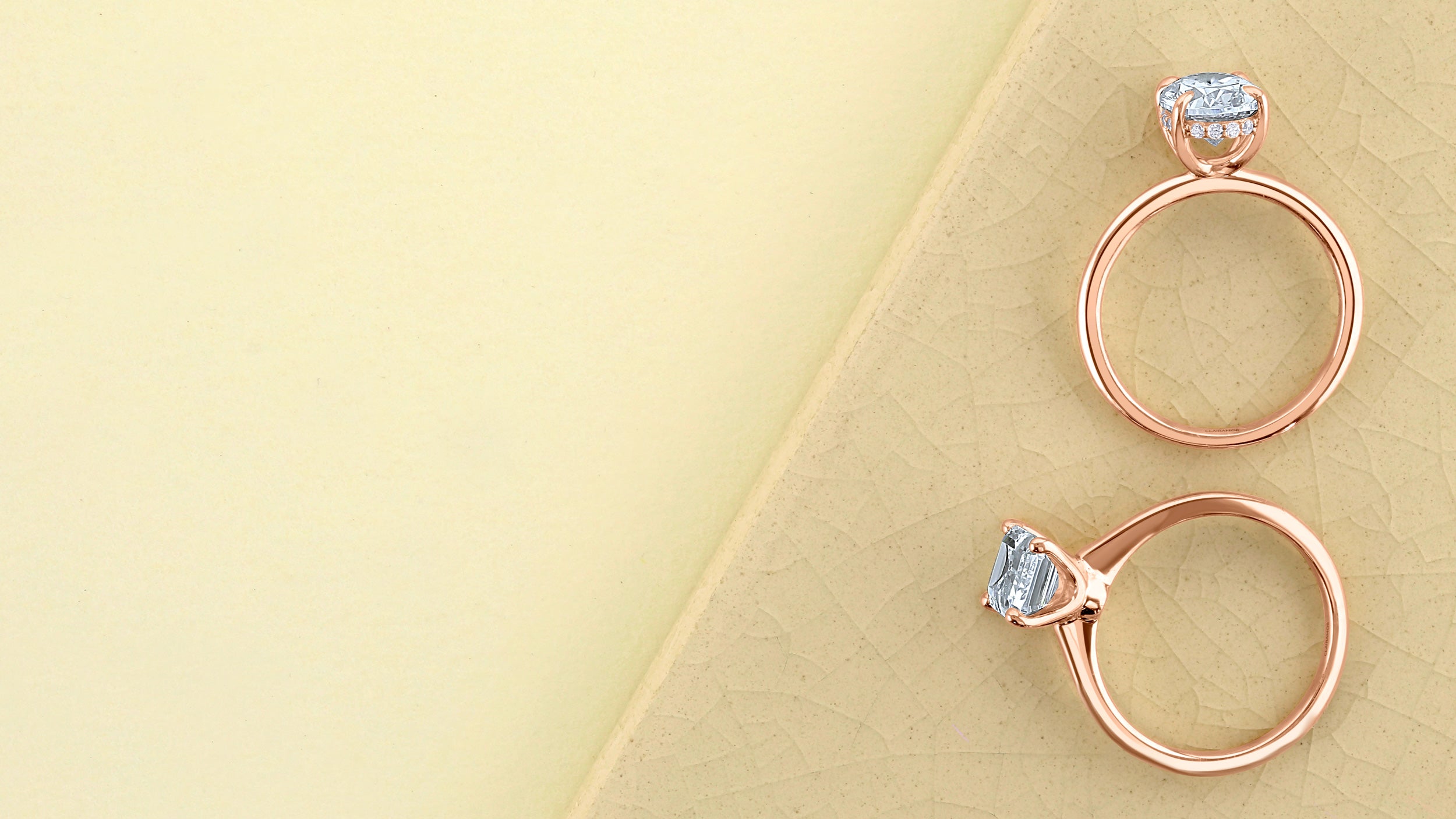
Two rose gold lab-grown diamond engagement rings.

How to Buy an Engagement Ring

Set a Budget

In the mid 20th century, diamond companies suggested you spend the equivalent of two month’s salary on an engagement ring. This equation was never driven by any kind of research, but was simply a diamond industry marketing campaign. 

What we suggest is that when setting a budget for a custom lab-grown engagement ring, you settle on an amount that you feel comfortable with. Different factors will impact pricing including style, metal type (gold vs platinum), quality, cut, clarity, color, carat, and sustainability (lab-grown diamonds.) 

When you search our collection of sustainable engagement rings, you’ll notice lab-grown diamonds and settings are priced separately. This offers you the opportunity to curate multiple options in order to create the look you want at a price that suits your budget. 

Remember, it’s important that this decision brings you both joy rather than putting a financial strain on you. To that end, we recommend using our pricing filters to manage and stay within your budget.

Shop Diamonds

Choose a diamond shape

Different diamond shapes pair more beautifully with certain settings. For example, round diamonds appear more brilliant in a 4-6 prong setting. Oval diamonds are dazzling in a cathedral setting, while princess cut diamonds shimmer in a v-prong solitaire setting. 

If you don’t have a vision of your ideal engagement ring, ask yourself a few questions: do you want a traditional piece or are you looking for something more contemporary? Are you drawn to rings that make a bold statement or are you content with a minimalist look? Do you have an idea of the type of setting you’d like? 

Your answers to these questions will help you determine the diamond shape that’s just right for you.

Learn About Diamond Shapes

Understand the 4Cs

When choosing a diamond, you’ll want to factor in the 4Cs.   The 4Cs are a universal diamond grading system that groups diamonds by their cut, color, clarity, and carat weight. These factors determine the diamond'soverall value and appearance.

Cut

The first C stands for cut. The cut of a diamond refers to the diamond’s ability to reflect light. There are many technical measurements taken to judge the grade of the cut. This scale groups stones between poor to excellent.. The overall cut of the stone will affect the brilliance, or sparkle of the diamond.

Color

The second C is color. This is a grade between D-Z. (D) represents colorless, and (Z) represents light yellow. The better the color grade, the rarer and more valuable a diamond is. Many seek to find colorless or near-colorless gemstones for their engagement ring.

Clarity

The third C stands for clarity, which refers to the presence of any visual blemishes or inclusions within a diamond. Clarity is graded on a scale from flawless to included. Flawless diamonds are the rarest and therefore more valuable than those with slight inclusions.

Carat

The last C is carat. Carat is the calculation of the weight of the stone, which is not to be confused with size. Some diamond shapes appear to be larger than others at exactly the same carat weight. The higher the carat weight, the more valuable the stone.

Learn More About 4Cs

Mined Diamond versus Lab-Grown Diamond Engagement Rings

As the cut, setting and style of engagement ring begins to take shape in your mind, you’ll need to consider whether to choose a mined diamond or a lab-grown diamond.

First, it’s important to know that lab-grown diamonds are “real” diamonds. They are identical in chemical composition to mined diamonds. The only physical difference between them is how they’re sourced.

In addition, lab grown diamonds offer several advantages over mined diamonds:

  • Exceptional clarity. Because they’re grown in a controlled environment, they have fewer inclusions and imperfections than mined diamonds.
  • Certified and graded. Lab-grown diamonds are recognized by the same gem labs as natural diamonds.
  • More affordable. Lab-grown diamonds are typically as much as 30-50% less expensive than mined diamonds of the same quality. This often allows you to buy a larger diamond or a higher grade stone than a mined diamond.
  • Ethically sourced. Mined diamonds are extracted from regions that are often linked to conflict or exploitation of workers. Additionally, lab-grown diamonds do not disrupt land, perpetuate deforestation or pollute water sources as mined diamonds do.
  • Selection. Lab-grown diamonds are available in all the same shapes, sizes and colors as mined diamonds.

You’ll discover that a lab-grown diamond engagement ring meets all the criteria you have when it comes to creating the ring you’ve always dreamed of.

Engagement Ring Style Guide

Picking an Engagement Ring Setting

The setting is where your diamond will be securely set. It is the actual ring itself. There are thousands of ring designs from which to choose. . Selecting the setting of your engagement ring will depend on your taste, personal style and to a great degree, the shape of the diamond you choose.Should  you have any questions or would like assistance, we encourage you to reach out to one of our representatives or book an appointment with us.

Engagement Ring Style Guide

Picking a Metal Type

The metal type you choose for your ring should be  based on your taste and personal preference. However, it is important to take certain details into consideration when making your choice.

Yellow Gold

Yellow gold most accurately mirrors pure gold and is the most classic setting color. This coloris more complimentary for people with warmer skin tones. Yellow gold is also better at disguising a lower grade diamond color.

White Gold

White gold engagement rings reflect a contemporary and elegant look , perfect for those seeking a modern and chic engagement ring. An 18k solid white gold setting is an excellent choice to showcase the brilliance of colorless diamonds.

Rose Gold

A rose gold engagement ring adds a touch of romance and femininity to any design. A 14k solid rose gold setting is  an ideal choice for those who want to mix and match with other metal colors or simply wear it on its own.

Platinum

Platinum engagement rings are prized for their unparalleled shine and strength, making them a superb choice for those seeking a durable and luxurious option.

How to Find Your Ring Size

The most accurate way to find your ring size is by having your ring finger measured by a professional jeweler. In lieu of that, you can also determine your ring size by printing out a ring sizer or by measuring a ring that fits well already.

Learn More About Ring Sizing

How to Pair a Wedding Ring with a Sustainable Engagement Ring

Again, the most important factor to consider is your own taste and personal preference. However, it’s important to recognize that some wedding bands fit better with certain types of engagement rings. Traditionally, the metal color of the two rings is the same, but this can vary if you so choose.

After you decide on the metal of your engagement ring, it's time to select your actual wedding ring.

  • Classic wedding rings are either solid bands, pave, or eternity style. Solid bands and pave will sit flush with your engagement ring, giving it a more seamless look. These types of wedding bands pair best with round or oval shaped diamond engagement rings. 
  • Eternity bands are also very popular but may not sit flush with your engagement ring. A jeweler can change the width of the band or the height of the head to achieve this look. Eternity bands pair best with square-shaped diamonds. 
  • Curved wedding bands work particularly well with fancy diamond shapes. These should be paired with their matching band to achieve the most attractive look.

It's also important to factor in the width of your wedding band and engagement ring. If your rings’ widths are mismatched they won’t sit well next to each other. 

If you have questions or need further assistance, we encourage you to book an appointment or reach out to one of our jewelry representatives.

Learn More About How To Pair a Wedding Band